
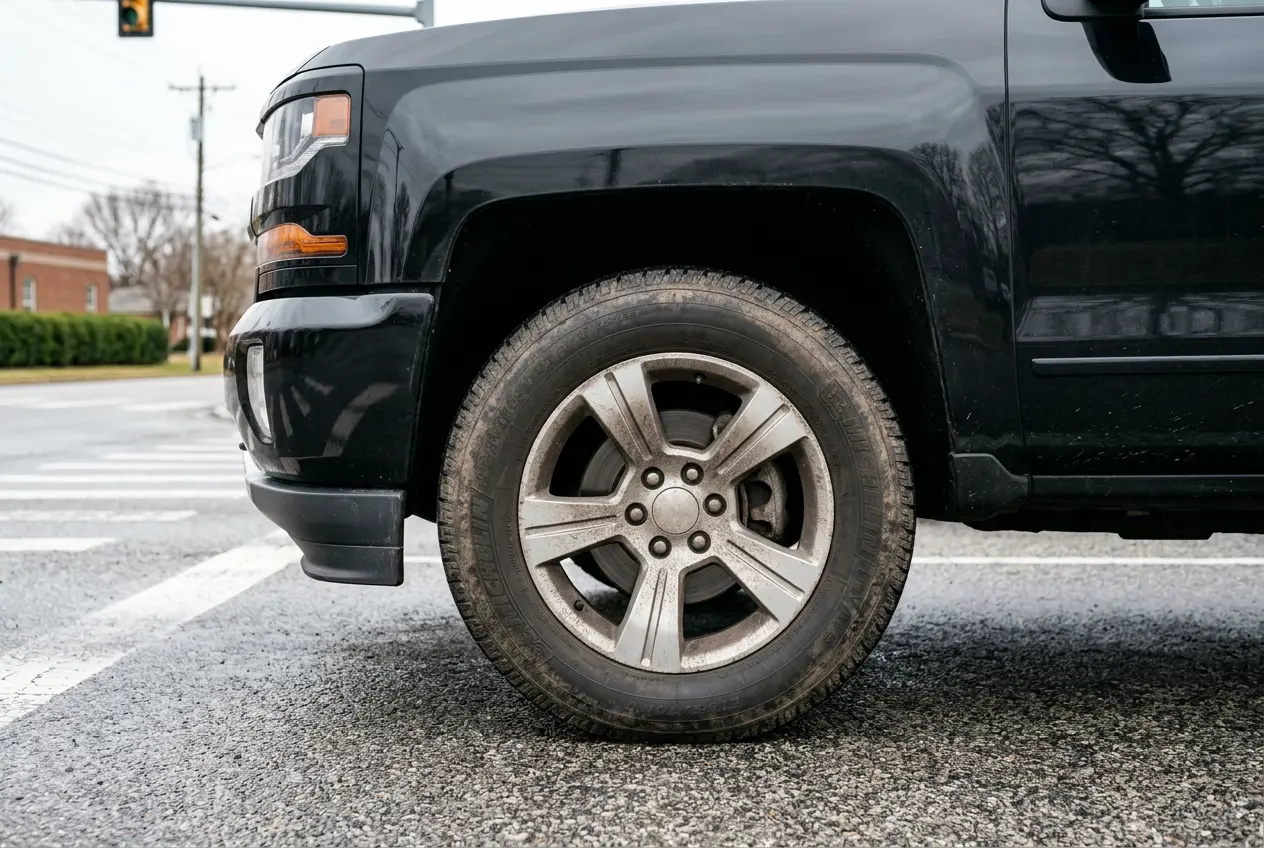
A hard brake pedal on a 2014-2018 Chevrolet truck or SUV is commonly diagnosed as a failing power brake vacuum pump. When the pump degrades, the brake booster loses its assist, and the pedal becomes stiff and requires much more force to stop the vehicle. This is a safety issue. Stopping distances increase, and the problem tends to get worse over time, not better.
Reviewed by Drew Camp, ASE-Certified Technician.
What vehicles are commonly affected?
This issue has been commonly reported on Chevrolet trucks and SUVs from roughly 2014-2018. That includes full-size pickups and full-size SUVs in the Chevrolet lineup. If you drive a Silverado, Suburban, Tahoe, or Avalanche from those years, your vehicle may be in the affected range. Bring your VIN to the shop so we can confirm whether your specific truck or SUV is involved, and check for any open manufacturer actions at NHTSA’s recall lookup.
What does the vacuum pump actually do?
Your brake booster needs a steady supply of vacuum to multiply the force you apply to the pedal. On many of these Chevy engines, a dedicated mechanical vacuum pump bolted to the engine provides that vacuum. When the pump wears internally, its output drops. The booster gets less assist, and the pedal starts to feel harder than normal. Eventually the pump can fail enough that braking requires serious leg force, far more than most drivers expect.
What are the early warning signs?
Catching this early matters. Here is how the problem typically progresses:
- Early stage: The pedal feels slightly firmer than usual, especially on the first stop after startup. You may notice it more after the truck has been sitting overnight.
- Mid stage: The pedal is noticeably stiff on most stops. You have to push harder to get the same braking response. The brake warning light may come on.
- Late stage: The pedal is very hard. Stopping distances are measurably longer. The vehicle may pull or feel unpredictable under heavy braking. This is a dangerous condition.
Is it safe to keep driving with a hard brake pedal?
No. A hard pedal is not a minor inconvenience. Reduced brake assist means longer stopping distances, and that gap between where you stop and where you need to stop can cause a collision. If your pedal feels hard or stiff, stop driving the vehicle and have it inspected. This is especially true if you are running Loop 250 at highway speeds or heading out on FM roads where a sudden stop may be required with no warning.
What does the repair involve?
The standard repair procedure for a failed vacuum pump on these trucks involves removing the old pump, inspecting the mounting surface and related vacuum lines, and installing a new pump. The pump is driven mechanically off the camshaft or engine accessory drive depending on the engine. Proper torque on the mounting bolts and a leak-free connection to the booster line are critical. After installation, the system is tested for vacuum output and the pedal feel is confirmed before the vehicle leaves the bay.
| Symptom | Likely Cause | Urgency |
|---|---|---|
| Pedal slightly firmer than normal | Early vacuum pump wear or cracked vacuum line | Inspect soon |
| Pedal noticeably stiff, brake light on | Vacuum pump output significantly reduced | Inspect immediately |
| Very hard pedal, longer stops | Vacuum pump near or at failure | Do not drive, tow in |
Should I check for a recall before I bring it in?
Yes, always. Run your VIN at NHTSA’s recall lookup and review the Chevrolet owner support page to see whether any open manufacturer actions apply to your vehicle. If a recall covers your VIN, that work is handled by the dealer. If your VIN is not covered, we handle the repair here as a standard out-of-warranty service.
What does this repair typically cost?
Without seeing your specific vehicle, we cannot give you a single number. Here is what moves the price:
- Engine type: Access to the vacuum pump varies by engine. Some configurations require more disassembly than others.
- Condition of related parts: If the vacuum line or booster check valve is also damaged, those parts add to the total.
- Parts quality: We use AC/Delco and Motorcraft-grade parts where applicable. OEM-spec parts cost more than economy alternatives but tend to last longer on trucks that see hard use.
Call us with your year, model, and engine size and we can give you a firm estimate before you commit to anything.
Why bring it to Wall Street Automotive?
Wall Street Automotive is an ASE-Certified shop with MOPAR master technicians on staff. We handle all gas and diesel repairs, including full brake system work on Chevy trucks and SUVs. We also work with most third-party warranty providers. If your VIN is not covered by a manufacturer action, we will give you a straight diagnosis and a clear repair plan. We offer free shuttles and courtesy vehicles so you are not stuck waiting.
Drivers in College Heights and Crestview Heights bring their trucks to us for brake work, as do customers from Parklea and across the area. You can review our full brake service page or read our guide on maintaining older vehicles in Midland for more context on how West Texas conditions affect your truck. For a full overview of what we do, visit our Midland auto repair page.
Frequently Asked Questions
Is it safe to drive my Chevy truck if the brake pedal feels hard?
No. A hard pedal means you have reduced or no power brake assist. Stopping distances increase significantly. Get the vehicle inspected before driving it further, especially at highway speeds.
Will a warning light come on when the vacuum pump fails?
Not always. The brake warning light may illuminate, but many drivers notice the hard pedal before any light appears. Do not wait for a light to confirm something is wrong.
What does a vacuum pump do on a Chevy truck?
The vacuum pump creates the low-pressure assist that makes your brake booster work. When it degrades, the booster loses its assist and the pedal becomes stiff and hard to push.
Does this affect both Silverado and Suburban models?
This issue has been commonly reported on Chevrolet trucks and SUVs from roughly 2014-2018, including models across the truck and full-size SUV lineup. Bring your VIN to the shop so we can confirm which vehicles apply.
How long does a vacuum pump replacement take?
Access and labor time vary by engine and model year, but the repair is typically completed in a single shop visit. We can give you a firm time estimate once we confirm your specific vehicle.
If your Chevy truck or SUV brake pedal feels stiff or hard, do not wait. Drew Camp, owner and ASE-Certified Technician, and the Wall Street Automotive team will confirm the cause and walk you through the repair options. We offer free shuttles and courtesy vehicles so you are not stranded while we work.
Call us: (432) 694-2277 | Schedule a brake inspection online